
Sample 1 · Contents
The contents from the opening pages through the first chapters on Who Am I?.
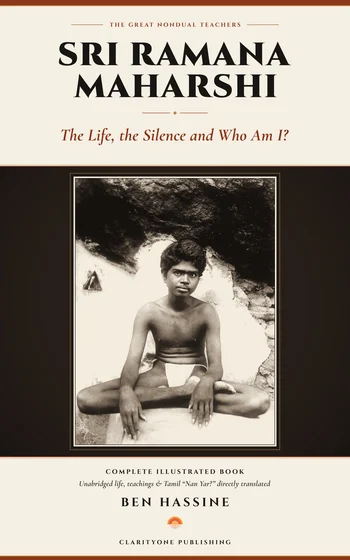
Complete Illustrated Book
At sixteen, perfectly well, a boy in Madurai was struck by a sudden, overwhelming fear of death. He lay flat, held his breath, and looked straight at what was actually going to die.
€12.99 / $12.99EPUB + screen PDF · 231 pages
English edition
Instant download (DRM-free EPUB & screen PDF) — private download link stays open 30 days.
Made by ClarityOne Publishing.
Look inside
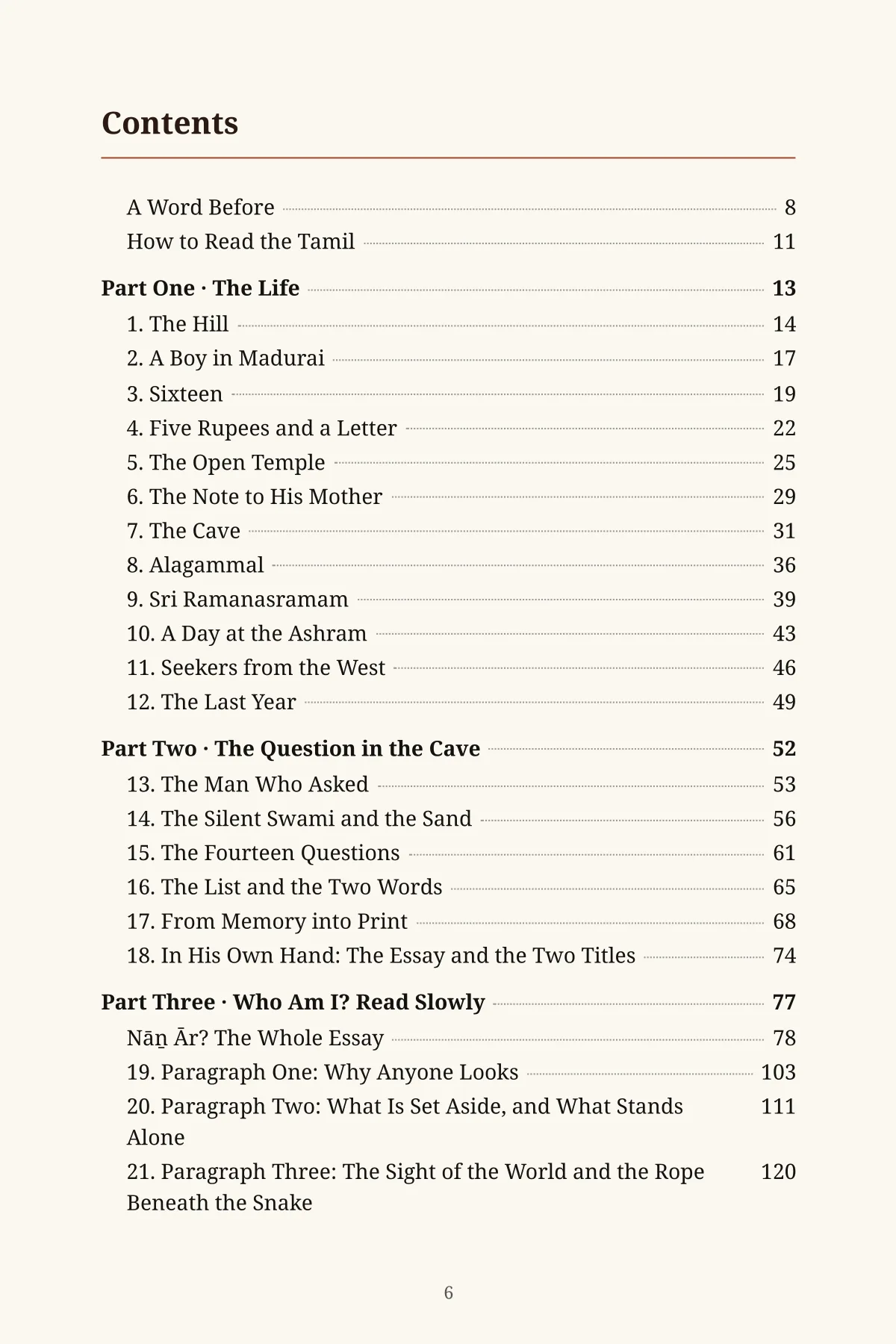
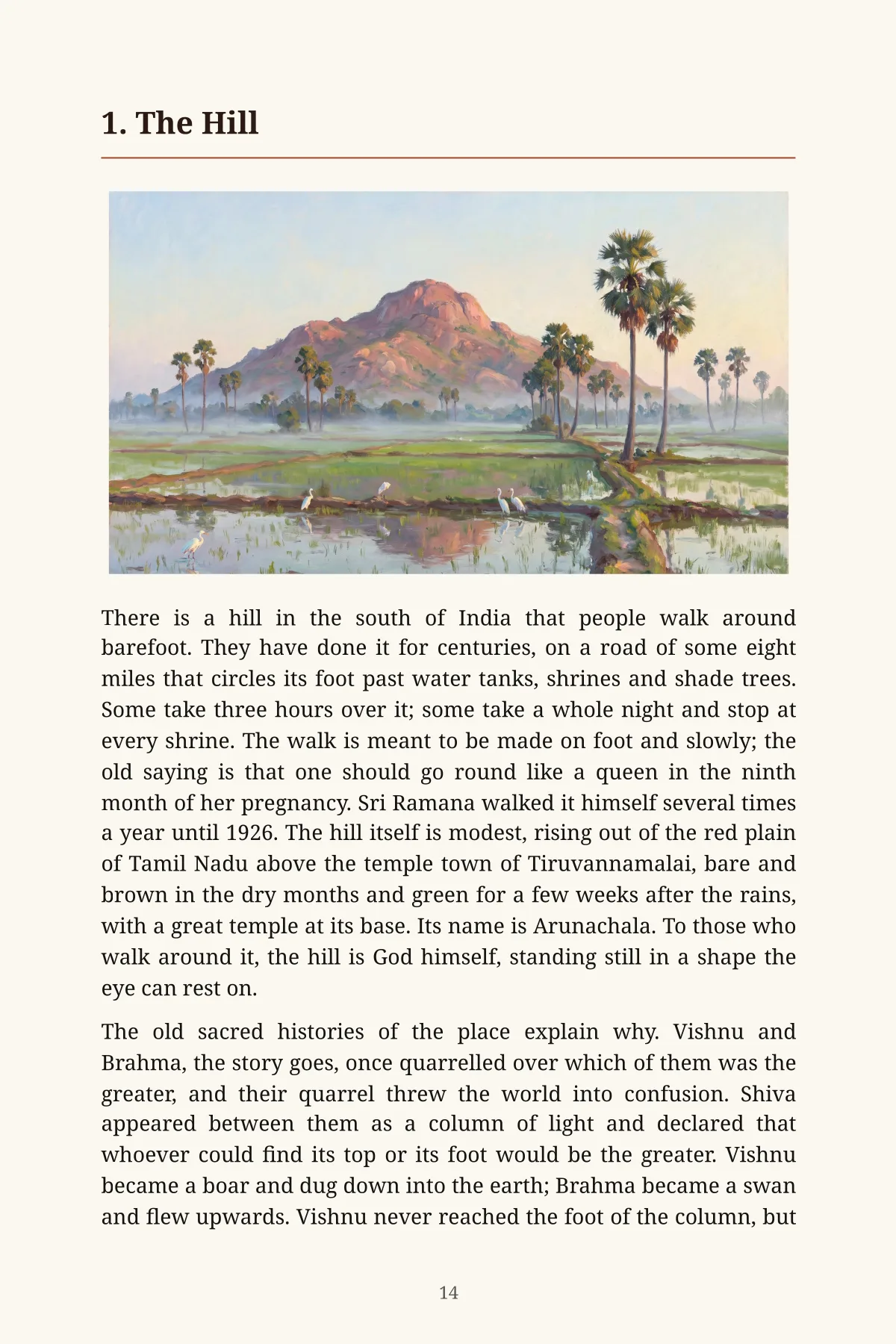
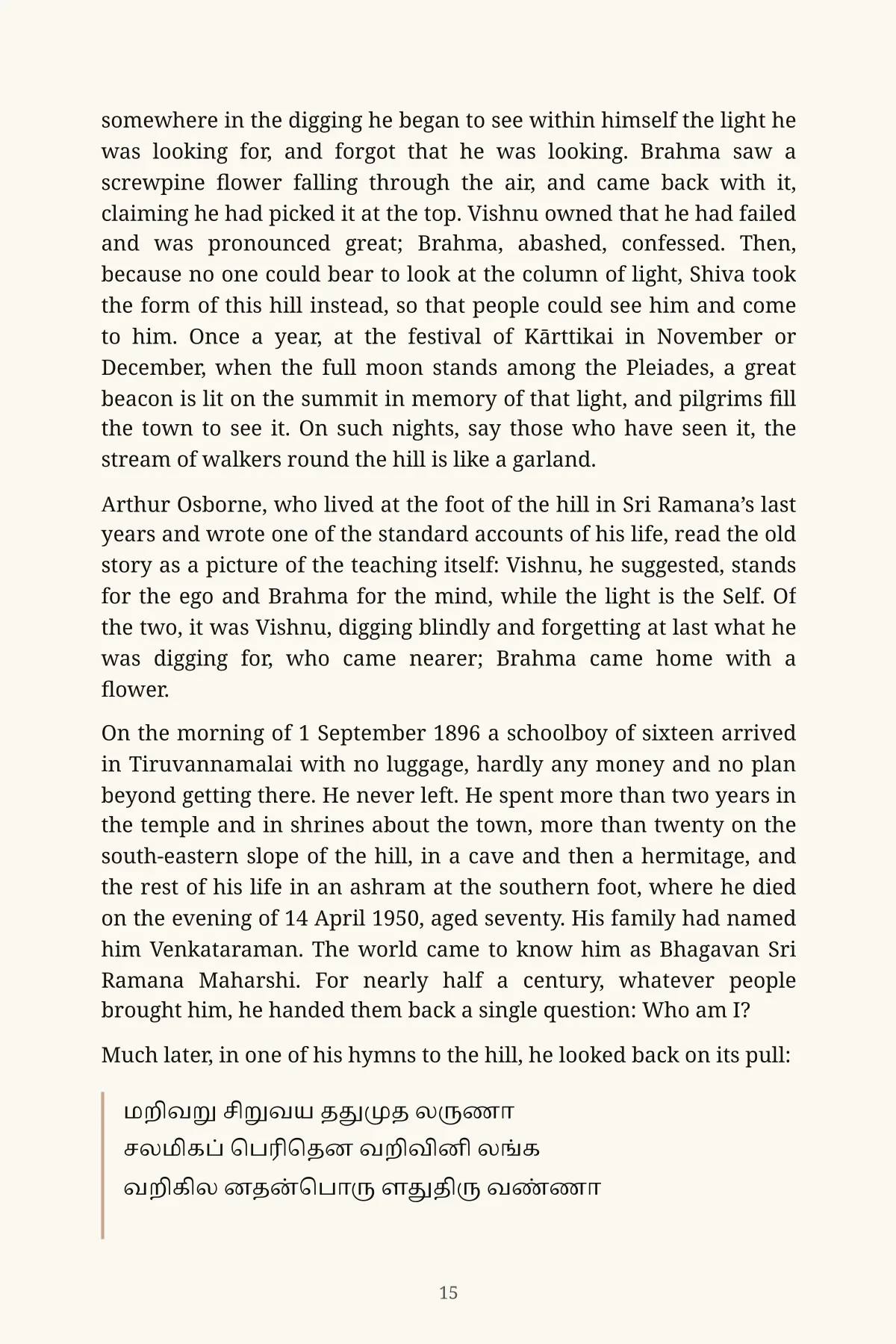
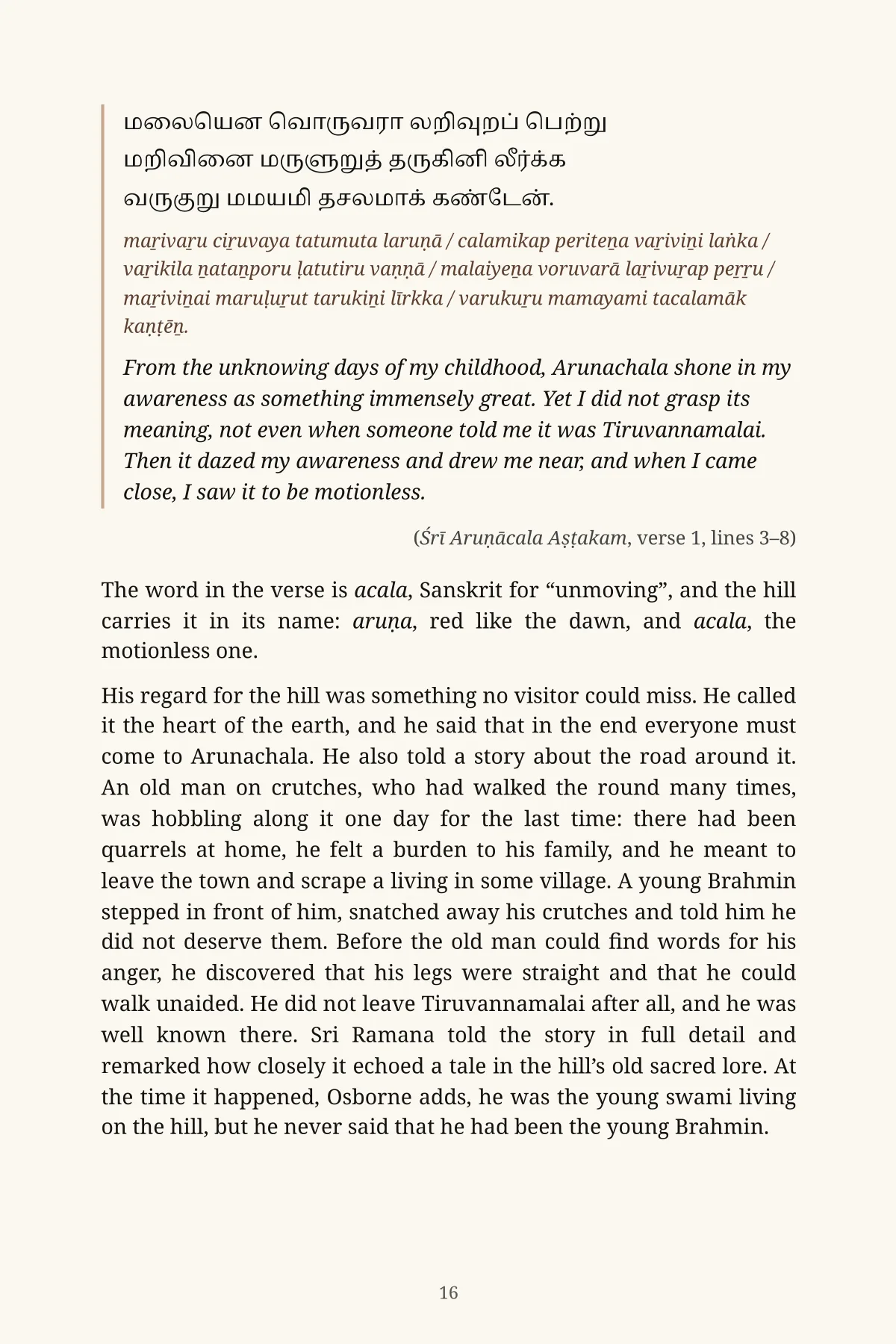
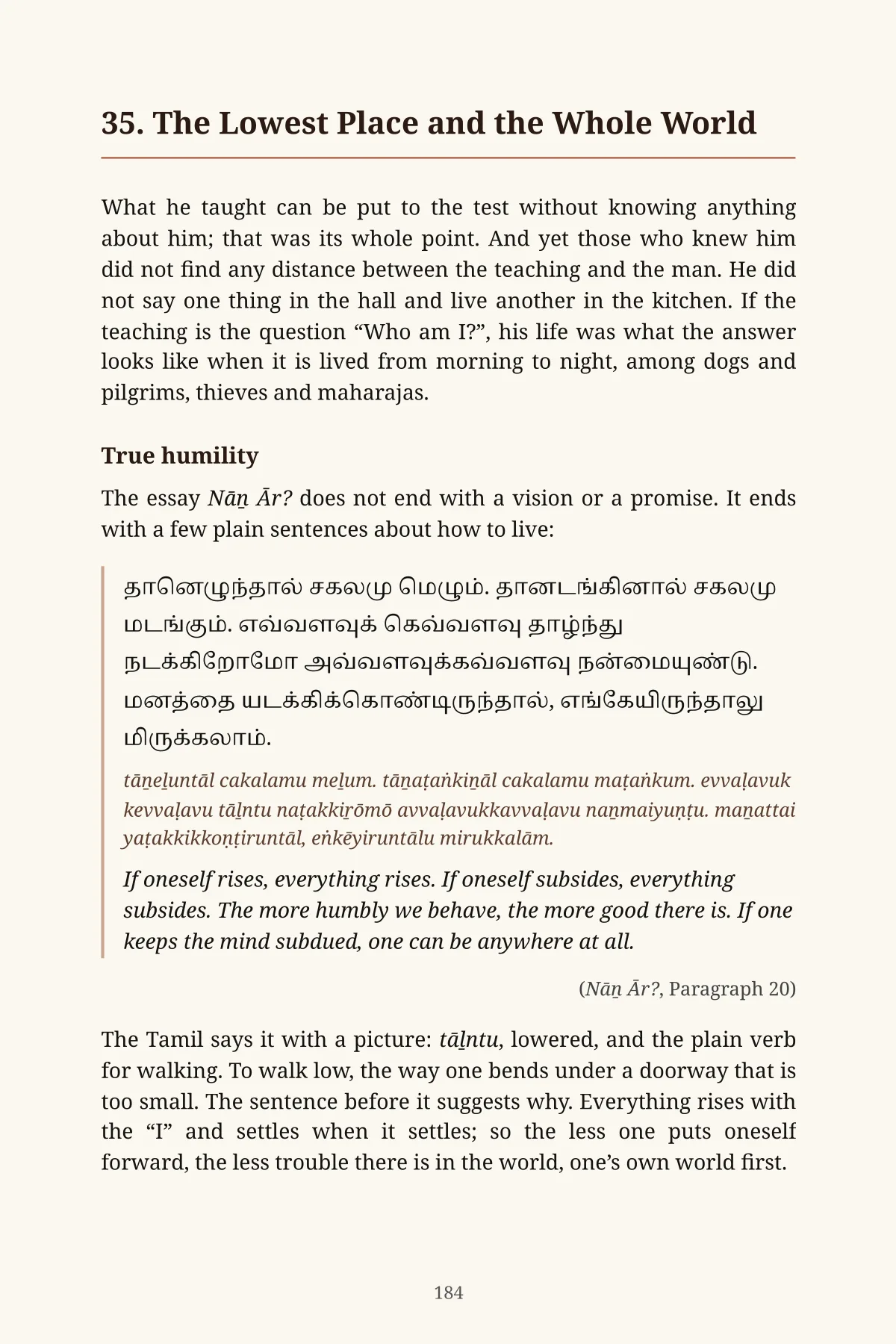
A plain-text overview of the 5 sample pages shown under “Look inside”.
The contents from the opening pages through the first chapters on Who Am I?.
The opening of chapter one, with an illustration of Arunachala across water and palms.
The story of the mountain, Ramana’s arrival in Tiruvannamalai, and the opening lines of his Tamil verse.
The verse in Tamil, transliteration and English, followed by the closing paragraphs of chapter one.
The opening of chapter thirty-five, with paragraph 20 of Nāṉ Ār? in Tamil, in Latin letters and in English.
About this book
Some weeks later he left two rupees and a short Tamil note among his brother’s books and set out for the hill of Arunachala. He never left it. In 1902 a young revenue official, Sivaprakasam Pillai, climbed to his cave with the question “Who am I?”, and the silent young swami answered by gesture, on the ground and on a slate. Out of those answers grew a small Tamil work of twenty paragraphs that has travelled around the world for nearly a century: Nāṉ Ār? (Who Am I?).
This Complete Illustrated Book follows his life from Madurai to his last year and his answers from the cave into print. It gives the whole essay in Tamil, in Latin letters and in our English, made directly from the Tamil, then reads its first seven paragraphs slowly, a chapter to each, and turns to a selection of his verses.
Inside the book
The Life (Chapters 1 to 12): his birth in Tiruchuzhi and boyhood in Madurai, the death experience at sixteen, the years in Virupaksha Cave, his mother Alagammal, daily life at Sri Ramanasramam, the seekers from the West, and his last year.
The Question in the Cave (Chapters 13 to 18): how Sivaprakasam Pillai’s questions, answered by gesture, on the ground and on a slate, were printed with their answers in 1923, and how Sri Ramana wrote the work out in his own hand as an essay, printed in 1928. Where the early accounts disagree, the book says so.
Who Am I? Read Slowly (Chapters 19 to 25): the whole essay of twenty paragraphs, then its first seven paragraphs read slowly, a chapter to each. Every Tamil passage stands in three lines: the Tamil, the same words in Latin letters, and our English.
The Teaching in His Verses (Chapters 26 to 32): selected verses of the Upatēca Untiyār (Thirty Verses of Instruction) and the Uḷḷatu Nāṟpatu (Forty Verses on That Which Is), on happiness, where “I” rises, diving within, work in the world, and silence.
Living the Question (Chapters 33 to 36): the common misunderstandings, surrender as the other wing, humility lived from morning to night, and the question that remains.
Before and after the chapters: How to Read the Tamil, A Life in Dates from 1879 to 1950, The Early Printings of Who Am I?, The Places, a Glossary, A Note on the Texts and the Translation, the Sources and the Notes.
“It does not ask what you think of yourself, what you have read or how far you have come. It asks who is here, reading this sentence, now.”
Illustrated throughout
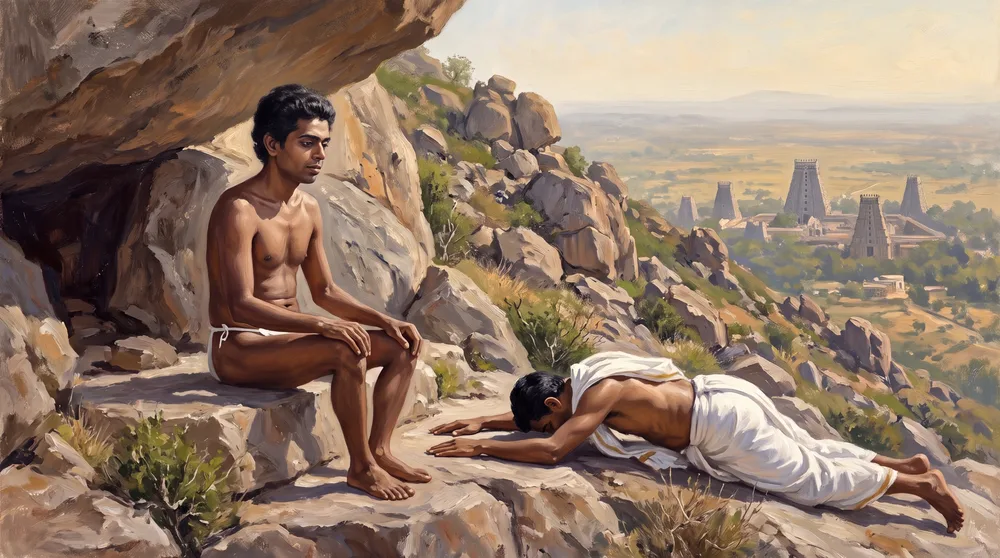
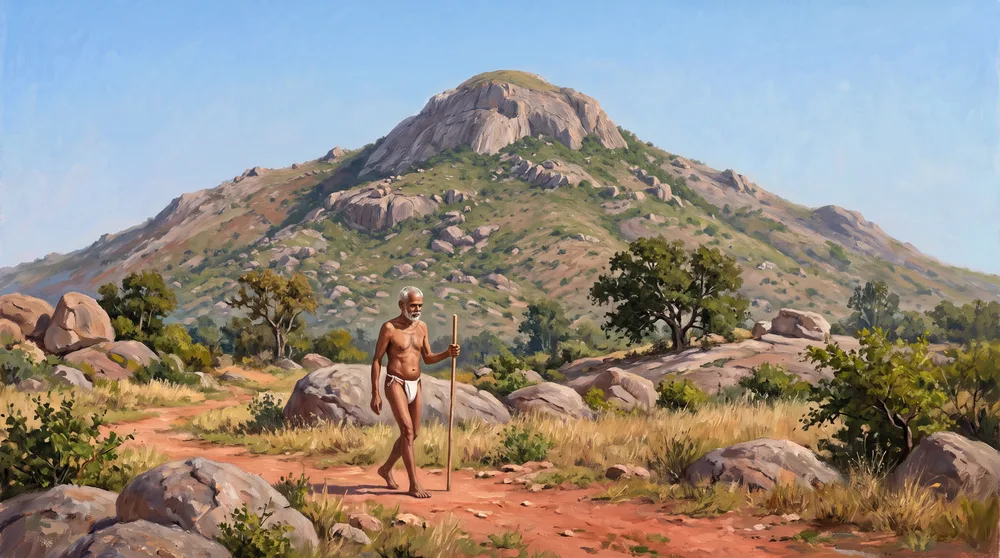
For readers
For readers meeting Sri Ramana for the first time, and for readers who have known him for years. Every Tamil passage has its English beneath it, so a newcomer can read straight through; a long-time reader can go to the Tamil first, set from the earliest printings we could find, and to the history of the text in Part Two.
Illustrated Pocket Editions
What you receive