
The Teachings of Sri Ramana Maharshi
Directly Translated Passages from the Tamil
12 pages
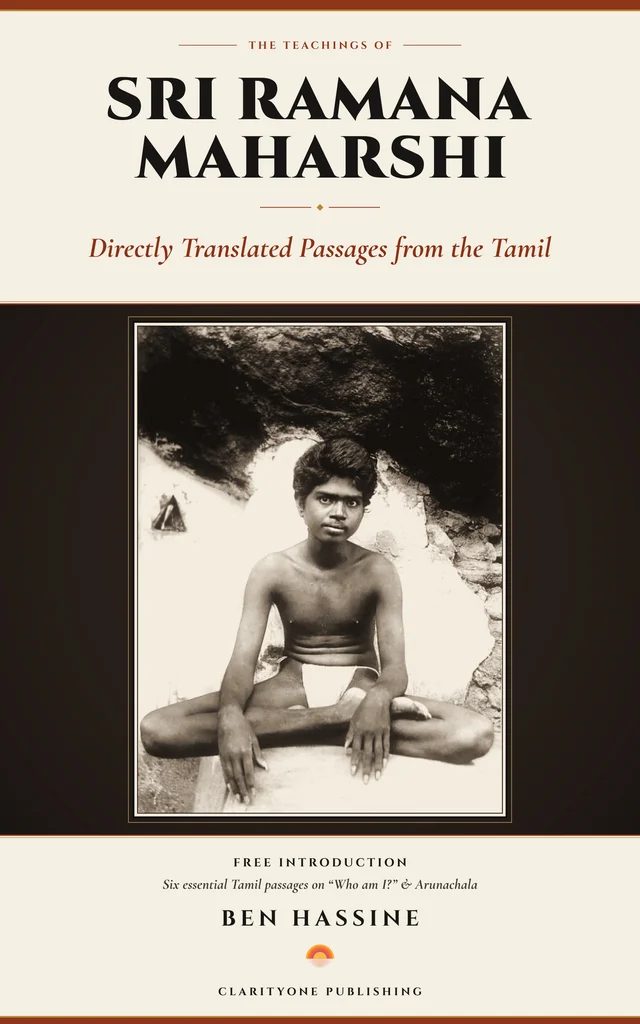
From the booklet
I. Sixteen
He was born at about one in the morning on 30 December 1879 in Tiruchuzhi, a small town some thirty miles from Madurai. It was the night of Ārudrā Darśanam, when the image of Shiva as the cosmic dancer is carried out through the streets and brought home to the temple before dawn. His father, Sundaram Ayyar, was a pleader in the local courts; his mother was Alagammal. Venkataraman was their second son: strong, fond of swimming and wrestling, unhurried over schoolbooks, and famous in the household for a sleep so deep he could scarcely be woken. In his teaching years later, deep sleep is the first clue.
His father died in 1892, when Venkataraman was twelve, and the boy went to live with his uncle Subbaiyar in Madurai. In November 1895 an elderly relative from home passed through, and Venkataraman asked where he had come from. From Arunachala, the old man answered. The boy knew the name from Tamil hymns as a sacred hill, yet now awe broke upon him: Arunachala was an ordinary town on a real map, and someone he knew had simply walked there.
In the middle of July 1896, sitting alone in an upstairs room of his uncle’s house, sixteen and perfectly well, a violent fear of death came over him out of nowhere. He was sure he was about to die.
He did not call for help or run downstairs. He decided to meet it alone, there and then. He lay flat on the floor, stretched out his arms and legs, and let them grow rigid like a corpse. He held his breath and pressed his lips shut so that not even the word “I” could escape. Then silently he looked into it: what was going to die? The body, plainly — carried away, laid on wood, burned to ash. Would he be gone with it? Was he that body at all?