
Where Was Jesus Born? What Luke and Matthew Actually Say
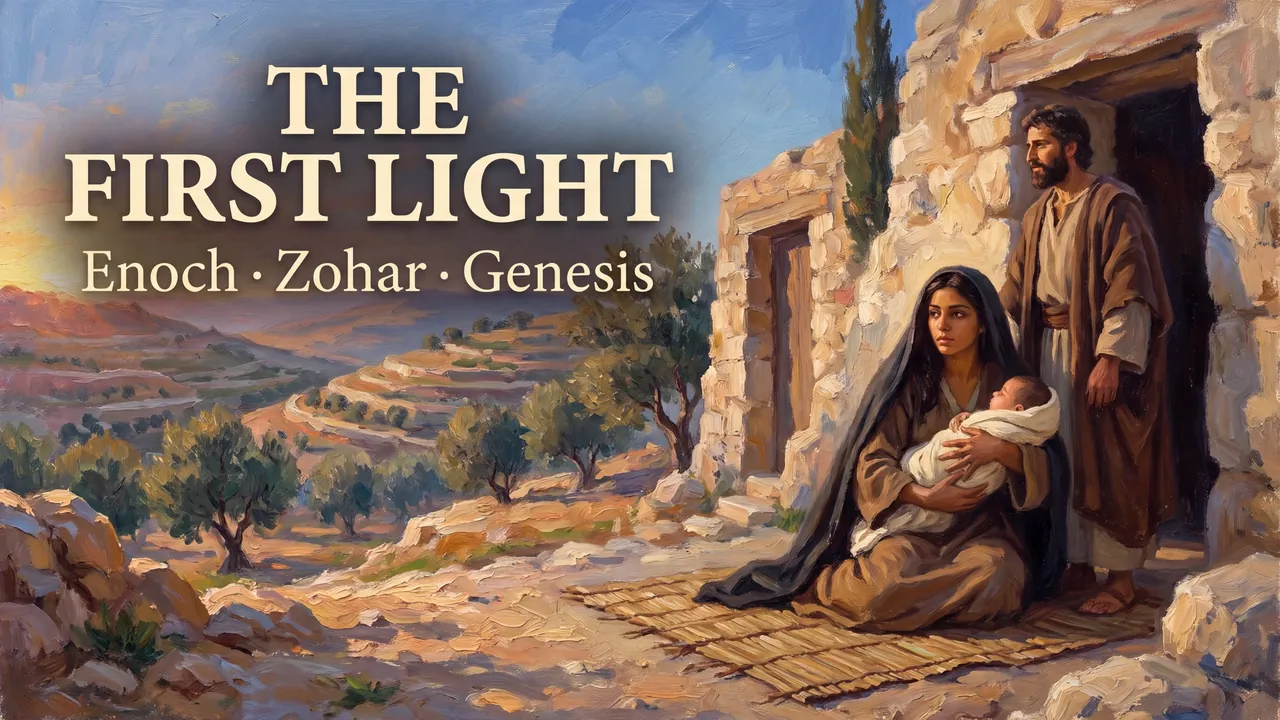
Luke and Matthew both place the birth of Jesus in Bethlehem of Judea, a hill town barely six miles south of Jerusalem. Neither Gospel describes the walls around the child. Matthew approaches Bethlehem through Jerusalem, where Magi ask in Herod's court for Israel's newborn king. In Luke, Joseph and Mary travel south from Nazareth in Galilee for a Roman registration, and Mary lays the child in an animal's feeding trough. Surviving second-century Christian writings are the first to name a cave.
Bethlehem (Beit Lechem, Hebrew for "House of Bread") was David's town, where Samuel anointed Jesse's youngest son after fetching him from the flock (1 Samuel 16:1, 11–13). Three hundred years later Micah called "Bethlehem Ephrathah" "too small" among the clans of Judah, promising one from it "to be ruler in Israel", whose "goings-out are from long ago, from days of old" (Micah 5:1). In Targum Jonathan, a Jewish Aramaic translation of the Prophets, "the Messiah will come forth to wield rule over Israel".
In Matthew, chief priests and scribes answer King Herod from Micah joined with God's shepherd promise to David in Samuel:
(5) Οἱ δὲ εἶπον αὐτῷ, Ἐν Βηθλεὲμ τῆς Ἰουδαίας· οὕτω γὰρ γέγραπται διὰ τοῦ προφήτου, (6) Καὶ σὺ Βηθλεέμ, γῆ Ἰούδα, οὐδαμῶς ἐλαχίστη εἶ ἐν τοῖς ἡγεμόσιν Ἰούδα· ἐκ σοῦ γὰρ ἐξελεύσεται ἡγούμενος, ὅστις ποιμανεῖ τὸν λαόν μου τὸν Ἰσραήλ.
Matthew 2:5–6 (Greek)
And they said to him: In Bethlehem of Judea; for so it has been written through the prophet: And you, Bethlehem, land of Judah, are by no means least among the governors of Judah; for out of you will come forth a leader who will shepherd My people Israel.
Matthew names neither a trough nor animals. When the Magi do not return, Herod sends soldiers to kill the boys of two years and under in Bethlehem and its borders before the child reaches Egypt, and Matthew quotes Jeremiah 31:15 on "Rachel weeping for her children" (Matthew 2:16, 18). Genesis 35:19 places Rachel's grave "on the road to Ephrathah, which is Bethlehem", while Jeremiah 31:15 and 1 Samuel 10:2 set her voice and grave in Benjamin near Ramah. Matthew alone among surviving first-century writings records that killing; Flavius Josephus chronicles Herod's court executions without mentioning Bethlehem, leaving outside proof open.
Luke starts with Caesar Augustus' decree for "the whole inhabited earth (oikoumenē) to be enrolled in a register" while Quirinius governed Syria (Luke 2:1–2), sending Joseph roughly eighty-five miles south:
(3) Καὶ ἐπορεύοντο πάντες ἀπογράφεσθαι, ἕκαστος εἰς τὴν ἰδίαν πόλιν.
(4) Ἀνέβη δὲ καὶ Ἰωσὴφ ἀπὸ τῆς Γαλιλαίας, ἐκ πόλεως Ναζαρέθ, εἰς τὴν Ἰουδαίαν, εἰς πόλιν Δαβίδ, ἥτις καλεῖται Βηθλέεμ, διὰ τὸ εἶναι αὐτὸν ἐξ οἴκου καὶ πατριᾶς Δαβίδ,
(5) ἀπογράψασθαι σὺν Μαριὰμ τῇ μεμνηστευμένῃ αὐτῷ γυναικί, οὔσῃ ἐγκύῳ.
Luke 2:3–5 (Greek)
And everyone travelled to be enrolled, each to his own town. And Joseph went up too from Galilee, out of the town of Nazareth, into Judea, into the town of David that is called Bethlehem (because he was of the house and family line of David) to be enrolled with Mary, who was betrothed to him as wife, while she was with child.
There Mary bears her firstborn son, binds him in swaddling cloths, and lays him "in a feeding trough (phatnē), because there was no space for them in the lodging (katalyma)" (Luke 2:7). Shepherds "living out under the open sky" and "keeping the night watches" hear an angel announce a Saviour born "in David's town": "you will find a baby wrapped in swaddling cloths and lying inside a feeding trough" (Luke 2:8–12). Hurrying in, they find the child there (Luke 2:16).
The Gospels leave the birth year open. Matthew places it before Herod the Great's death (4 BCE for most historians, 1 BCE for some), while Josephus dates Quirinius' census of Judea to 6 CE. Historians have weighed an earlier Syrian command for Quirinius or reading Greek prōtē as "before Quirinius governed Syria", yet no Roman inscription settles the gap. The exact year is unknown.
Luke leaves the walls around the trough unnamed. His word katalyma can mean a travellers' halting shelter or an upstairs guest room; Judean stone houses built against bedrock often kept animals a few steps lower or in a carved cave-annex.
Surviving second-century writings name a cave. In the mid-second century, Justin Martyr wrote (Dialogue with Trypho 78) that Joseph sheltered in a cave near Bethlehem, and less than a century later Origen wrote (Against Celsus 1.51) that locals still showed the cave and trough before Constantine's fourth-century Church of the Nativity rose over it. Outside Scripture, the second-century Protevangelium of James sets the birth in a cave where "a bright cloud was overshadowing the cave" before "a great light" shone inside (18:1; 19:2). First-century records cannot prove that grotto is the spot Luke pictured; the question stays open.
In our own reading, Micah's "too small" clan and Luke's feeding trough belong to one pattern. Samuel sent to the pasture for Jesse's youngest son, and in Bethlehem the newborn ruler lies in an animal's trough, where shepherds off the night hills walk straight in.
The illustrated pocket edition The Revelation of the Nativity, Book Two: The Cave, the Manger & the Tower of the Flock prints the Gospel, prophetic and early cave passages in Greek, Hebrew, Aramaic and Syriac, with our English beneath each.