
Work, identity and disruption
Automation changes more than tasks. It can unsettle livelihood, status, vocation, rhythm and the stories through which people know their worth.
The Age of Unveiling
Artificial intelligence is already changing work, creativity, relationship, authority and the way people understand themselves. ClarityOne meets that reality with technical honesty, spiritual depth and care for the human person.

AI can help people learn, create, communicate and reach knowledge that once remained inaccessible.
It can also mislead, isolate, exhaust, manipulate attention and intensify vulnerabilities that require real human care.
A field of discernment
The question is not whether AI belongs to a sacred or demonic category. The work is to see what it enables, what it damages, who carries the cost, where it can serve, and where a human boundary must remain.
Automation changes more than tasks. It can unsettle livelihood, status, vocation, rhythm and the stories through which people know their worth.
Human–AI collaboration can widen creative possibility while raising real questions about voice, consent, labor, attribution and responsibility.
Confident language can conceal error. Sycophancy, hallucination and simulated intimacy make source judgment and reality-testing newly important.
Spiritual communities need technical literacy without surrendering prayer, embodied care, moral responsibility or the wisdom carried by living traditions.
AI can help people learn, create, communicate, translate and organize. Usefulness becomes humane when limits, provenance and human oversight remain visible.
As software begins to act, decide and communicate on our behalf, delegation must remain visible. Convenience cannot quietly dissolve consent, judgment or responsibility.
Related inquiry
When Religion Calls the Light Demonic
A source-grounded inquiry into uncertainty, projection and responsibility across spiritual discernment, AI and the unknown.
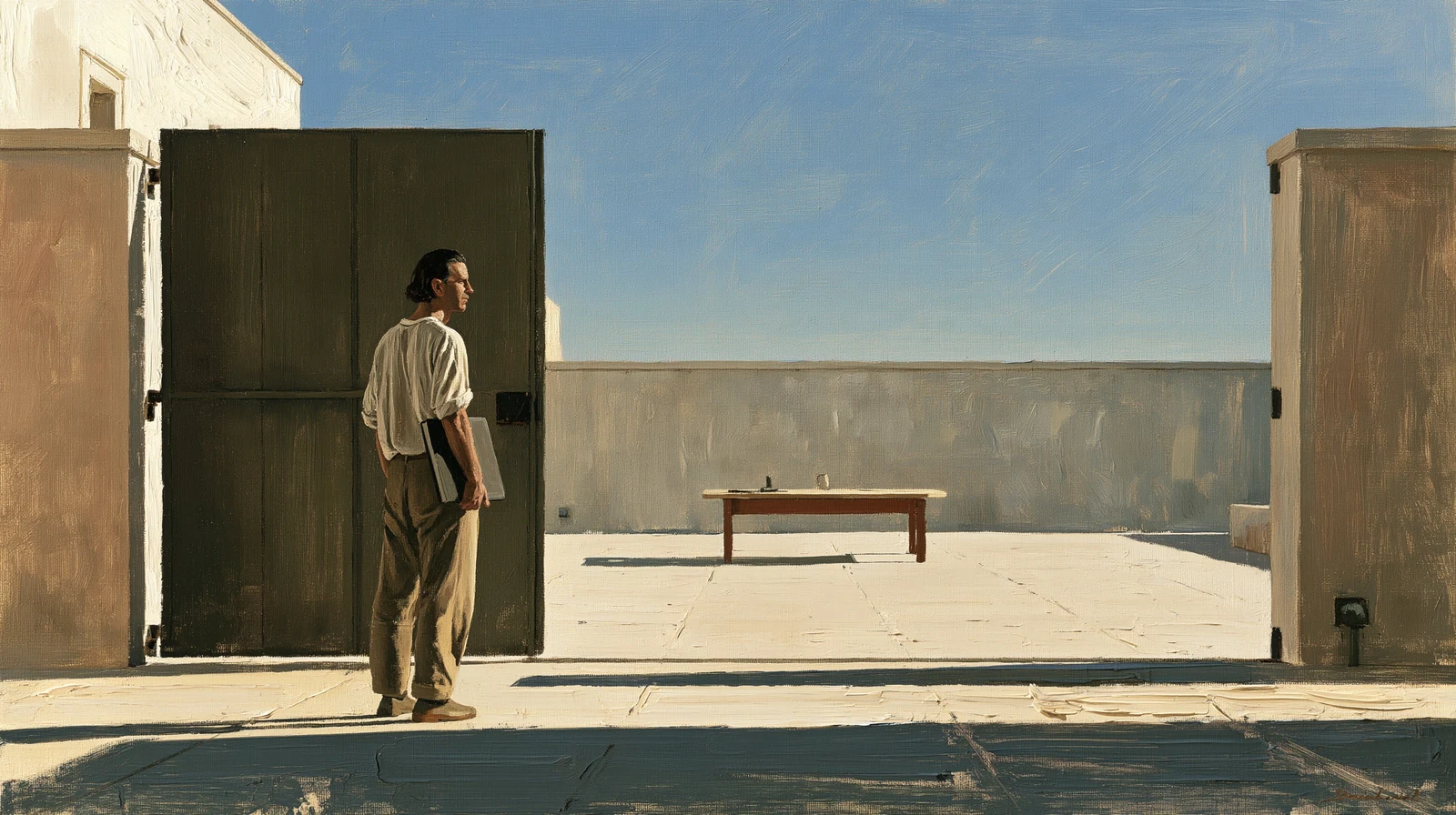
Recognition
In practice
The inquiry takes form as essays, films and public research — and, where a question needs more, as talks, workshops and practical guidance.
Human vulnerability and possibility
This inquiry includes loneliness, isolation, synthetic companionship, emotional dependency, cognitive overload, disrupted sleep, depressive vulnerability, manic escalation, psychotic symptoms and loss of reality-testing.
It also studies possible benefits: low-threshold learning, reflection, psychoeducation, accessibility, cognitive support and carefully bounded tools that help people reconnect with human care.
“AI burnout” and “agentic AI burnout” are used here as provisional descriptive terms for overload around intensive use and always-available systems, not as settled clinical categories.
“AI psychosis” is treated here as an emerging research framework rather than a diagnosis. Associations, predispositions and reported cases must not be confused with simple proof of causation.

The human boundary
AI cannot replace embodied human care, conscience, community, sacramental life, professional responsibility or living ministry.
Published now
An essay and film on what artificial intelligence is unveiling in work, identity, responsibility and spiritual life.

Essay · 16 min
Artificial intelligence as unveiling: function, exhaustion, religion, the false owner, Yeshua asleep in the boat, and the grace that remains when constructed identities tremble.
Read AI and ApocalypseFilm · AI & Human Futures ·
A grounded inquiry into what AI is unveiling in work, exhaustion, identity, responsibility and spiritual life — the first movement of The Machine.
Watch the filmAn open conversation